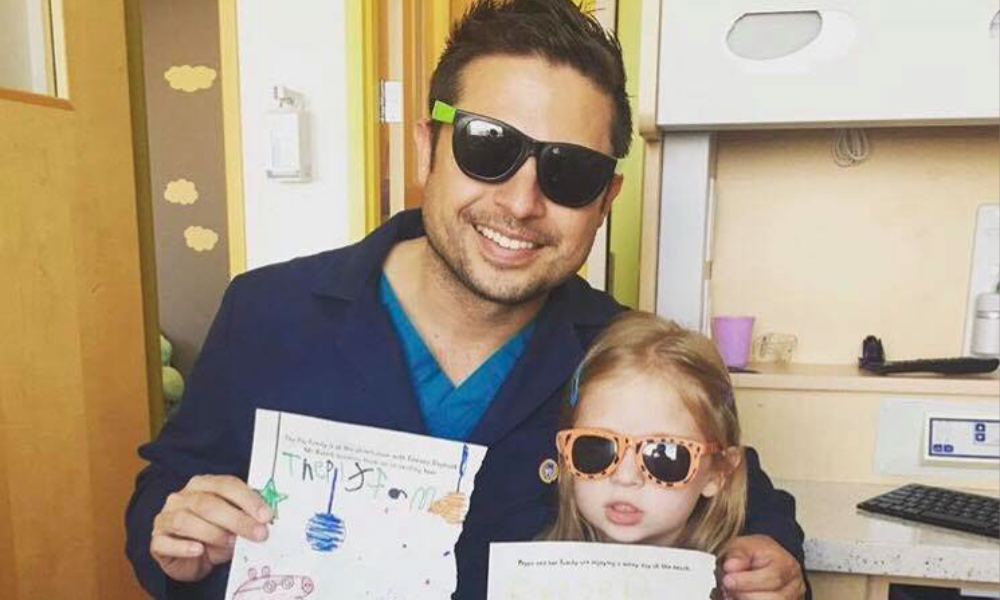
You may knowDr. Roger Castro as your super awesome Central Park pediatric dentist who’s dedicated to making dental visits relaxed, positive and fun for kids and parents alike. However, did you also know when he’s not making smiles sparkle at Kids Mile High Pediatric Dentistry, he’s an ice cream aficionado and loves rooting for the San Francisco 49ers? Well, there are more fun facts where those came from. To help you get to know Dr. Roger a little better, we played a game of 20 questions.
Where did you grow up?
I was born in El Salvador and I grew up in California, Texas, Tennessee, and Maryland.
Why did you become a Denver pediatric dentist?
I like joking around with kids all day!
What is the best vacation you’ve ever taken?
The best vacation I ever went on was to South Africa.
Who is your role model?
My dad is my role model.
What’s your favorite thing about coming to work at Kids Mile High every day?
Seeing the colorful fish!
What are your three favorite ice cream flavors?
I love vanilla, cookies and cream, and peanut butter ice cream.
What’s your favorite movie?
Die Hard
What was the most challenging part of dental education?
Definitely the one million exams!!
How would you describe your perfect weekend?
My perfect weekend is watching sports with my baby on my lap.
What is something your patients would be surprised to learn about you?
I hate getting blood taken.
Which sports team do you root for?
The San Francisco 49ers, San Francisco Giants, and the New York Knicks
What do you think makes you different from other pediatric dentists?
I am silly!
If you could have a super power what would it be?
My super power would be time travel.
What was your first concert?
The first concert I went to was Wu Tang Clan with Rage Against the Machine.
What’s your spirit animal?
A squirrel
What’s the best advice you can give parents about caring for their kids’ teeth?
Encourage lots of water, fruits and veggies!!
What is your favorite food?
Maryland blue crabs
What is your favorite holiday?
Thanksgiving is my favorite holiday.
If you want to meet Dr. Roger in real life and learn more about what makes him such a fantastic Denver pediatric dentist,schedule a visit at Kids Mile High Pediatric Dentistry today!
The vast majority of kids will eventually have crooked teeth to some degree and end up wearing braces or Invisalign Teen. In fact, in North America, about 80 percent of teens are currently receiving orthodontic treatment. While, sure, some of it’s determined by genetics, crooked teeth are more often than not caused by incorrect jaw and facial development, usually as the result of poor myofunctional habits, such as thumb sucking, reverse swallowing, tongue thrusting and mouth breathing.
Emerging issues can be seen in kids as young as three and, many times, if not dealt with, this misalignment of the teeth and jaws can lead to the need for extensive orthodontic treatment or even surgery later in life. At Kids Mile High Pediatric Dentistry, both Dr. Paddy and Dr. Castro are trained in something called myofunctional orthodontics and we use the Myobrace system to get kids’ oral development back on track and help align the jaws and straighten teeth without braces.
How to Straighten Teeth Without Braces
Smile Concerns
The whole aim of braces, or any type of orthodontic treatment for that matter, is to fix malocclusions, or issues with the positioning, alignment or spacing of the teeth and jaws. Crooked teeth and jaws are a cosmetic concern and they can lead to teasing, make kids feel self-conscious and throw off the balance of a child’s facial features. Yet, it goes beyond appearance because malocclusions can also affect the airway, make teeth harder to clean, leading to cavities and gum disease, and interfere with the ability to chew and speak properly.
We can see some red flags from a fairly early age, such as impending crowding or a developing underbite. In certain cases, your dentist or orthodontist will recommend interceptive orthodontic treatment, also known as two-phase orthodontic treatment. With this approach, kids wear appliances or braces while they’re still growing. This is because, at this stage, growth and development of the teeth and jaws can be easily manipulated.
Then, the child will have a resting period for a few years while the remainder of the permanent teeth come in and, finally, they’ll finish up with braces or Invisalign Teen when they’re a teenager. This all sounds great but the expense and time involved can be significant. Additionally, not all young kids are thrilled about wearing braces and the responsibility that comes with it, which is why many parents want to know how to get straight teeth without braces. That’s where Myobrace comes in!
What is Myobrace?
The Myobrace system is based on the principles of myofunctional orthodontics, or preventative pre-orthodontics. Dr. Paddy and Dr. Castro love the system because it’s a natural way to fix bad myofunctional habits (i.e., tongue thrusting, thumb sucking, mouth breathing and reverse swallowing) and exert light force to help align the jaws and teeth into their correct position. It also optimizes facial and jaw development, so teeth come in naturally straight, often without braces or extractions.
Myobrace consists of a series of removable, oral appliances that kids wear for one to two hours every day and overnight while they’re sleeping. They don’t have to wear them to school or out in public, which can be a concern when it comes to standard orthodontic appliances. In the first stage of treatment, the appliance is aimed at habit correction to improve the odds that the little one’s jaw will grow to its full size with enough room for all of the permanent teeth to come in.
For kiddos with underdeveloped jaws, there may be a second stage that aids in arch development and there are appliances that can be used in combination with Myobrace. There is also an alignment stage that can use gentle pressure to encourage teeth to shift into their natural position. The last stage of Myobrace treatment is the retention stage and the goal is to make sure a child’s good oral habits are maintained. This can usually prevent the need for a permanent retainer.
In addition to the appliance component, kids also do myofunctional exercises, called trainer activities, to really get to the root of the problem. These exercises are kind of like a workout for their mouth and only take a few minutes a day. A lot of our young Englewood and Denver Myobrace patients find them to be pretty fun and kids can complete their exercises while watching television or doing their homework. At the end of treatment, Myobrace results include a properly developed and positioned jaw, aligned teeth and an open airway.
What are the Benefits of Myobrace?
Teaches children to breathe out of their nose
Helps kids find the correct tongue resting position
Encourages correct swallowing
Keeps the lips together
Exerts gentle force to develop and align the jaws and straighten teeth without braces
Improves facial development
Doesn’t need to be worn all day or at school
Removable, allowing for proper brushing and flossing
No food restrictions
Opens the airway, which can improve asthma, allergies and snoring
Corrects bad myofunctional habits, truly addressing the underlying cause of crooked teeth and underdeveloped jaws
Comfortable
Kids won’t experience a relapse like they often will with braces or Invisalign
Can be effective for children three- through 15-years-old
No complicated appliances or brackets and wires
Does Myobrace Work?
The Myobrace system does work! Studies have illustrated that it can be effective for a variety of cases. While braces might be the more well-known treatment, doctors have actually been using myofunctional orthodontics with great success for over 25 years. Because Myobrace tackles the root of a child’s malocclusion, the results are permanent. With traditional orthodontics, if you don’t wear a retainer afterwards and, sometimes, even if you do, the teeth will shift back to their old positions. This doesn’t happen with Myobrace. Though Myobrace results can vary depending on a number of factors, it allows many patients to avoid braces completely. In the small number of instances that braces are needed when a patient is a teenager, they typically only have to be worn for a short period of time.
Interested in learning more about how we can straighten teeth without braces? Or, want to find out if your child is a candidate for our Englewood or Denver Myobrace treatment? Schedule a visit at Kids Mile High Pediatric Dentistry today!
You made it through teething, got a few years of a break (well, as far as your kiddo’s pearly whites anyway) and, suddenly, your child’s first loose tooth enters the picture. The smile changes are back again in full force! Unlike sprouting those primary teeth, the process of a child losing baby teeth and getting their permanent ones isn’t typically painful. Once they get used to the sensation of a tooth being wiggly and realize it doesn’t hurt when it falls out, most kids enjoy this stage.
The Tooth Fairy is involved after all. For the parents at our Englewood and Central Park pediatric dental offices, it can be a different story. They often worry about the order of eruption or maybe their child’s loose tooth won’t come out or, perhaps, they’re concerned about the appearance of the new permanent teeth. To put your mind at ease, the team here at Kids Mile High Pediatric Dentistry is breaking down everything you need to know about your child losing baby teeth.
When do Kids Start to Lose Baby Teeth?
The average age for a child to lose their first tooth varies pretty dramatically. That’s why it’s totally understandable for parents to be concerned when their little one’s friends are getting visits from the Tooth Fairy but their child isn’t. Almost every baby teeth chart says kids start to lose baby teeth between the ages of six- and seven-years-old. This is pretty average but some children start losing baby teeth as early as age four and others begin as late as seven or even eight. It doesn’t necessarily mean something is wrong but it’s always best to check with your pediatric dentist if your child’s baby teeth seem to be hanging in there for longer than usual.
A baby tooth almost always falls out because the permanent tooth underneath it pushes it out as it starts to come in. Though sometimes,injury, cavities or other issues can result in a baby tooth falling out when there is no permanent tooth to replace it. When this happens, the other teeth have a tendency to want to fill in the space, which may lead to crowding. In these instances, we usually use a space maintainer to hold room for the grown-up tooth to come in later.
What Order do Kids Lose Baby Teeth?
One of the most common questions Dr. Paddy and Dr. Castro get is what order do kids lose baby teeth? Well, in most cases, the primary teeth fall out in the same order they erupted. The American Dental Association has a super handy baby teeth and permanent teetheruption chart that will give you a good idea as to the timeline. Typically, the lower front teeth are the first to say goodbye, followed by the top front teeth. Much like the baby teeth order, the rest tend to fall out symmetrically, meaning the tooth on one side will shed around the same time as its partner on the other side of the mouth. Bottom teeth usually fall out before the same teeth in the upper arch.
Will Baby Teeth Fall Out on Their Own? Can I Help Them Along?
The vast majority of the time, baby teeth will fall out on their own. Every once in a while, Dr. Paddy and Dr. Castro have to help a tooth along and encourage it to erupt but this is rare. If a child’s loose tooth won’t come out, have them wiggle it gently with their tongue. Each tooth goes through a whole process where the root is broken down and absorbed and it can sometimes take a few months from the time a tooth gets wiggly to when it finally hits the road. So, we don’t recommend the old dental floss on the door knob trick or yanking it out since it might not be ready. Pulling a tooth before its time can lead to damage or infection.
Why are my Child’s Permanent Teeth so Big?
Around age four, a child’s jaw and face start to grow to accommodate the permanent teeth. Not only are there more permanent teeth than primary teeth, they’re also larger and not as white. They might even have visible ridges that will eventually smooth out as a child puts them to good use chewing and biting. The difference can be a bit startling at first but when all of the baby teeth are gone and you’re comparing these larger teeth to teeth of similar size, your child’s smile will look much like yours.
When do Permanent Teeth Grow in?
When the first baby tooth falls out (most likely one of the lower front teeth) around the age of six or seven, a permanent tooth should be right behind it. If a baby tooth falls out and no permanent tooth replaces it after six months, contact your pediatric dentist for evaluation. The tooth could just be taking its sweet old time or it could be due to an issue like a congenitally missing tooth. We’ll get to the bottom of it and make sure your child’s smile development stays on track.
In addition to the replacement teeth coming in, thefirst permanent molars also tend to grow in between six- and seven-years-old, which is why they’re sometimes called the “six-year molars.” This can be a little confusing because these teeth are erupting into an open area where there wasn’t baby teeth before. Some kids gets these permanent teeth first while others get their lower front teeth first.
From the time kids start losing baby teeth to the time the final one falls out, they’re in a phase known as “mixed dentition,” meaning they have a mixture of primary and permanent teeth. This mixed dentition stage lasts until 12- or 13-years-old. At this age, once the permanent second molars come in, kids have all of their grown-up teeth except for the wisdom teeth. If thewisdom teeth erupt at all, it’s usually between 17- and 21-years-old.
Since the permanent teeth need to last a lifetime and there are no backups waiting in the wings if they fall out, oral care becomes more important than ever. Encourage your child to brush those grown-up teeth twice a day, floss once daily and limit snacking and sugary treats. Be sure to keep up with regular dental checkups and cleanings too.
Throughout the process of your child losing baby teeth and gaining new ones, try to keep in mind that every child is unique and primary teeth usually make their exit when they’re ready. If you have questions or concerns about how your child’s smile is taking shape,schedule a visit at Kids Mile High in Englewood or Central Park. We’ll work with you to keep your little one’s teeth healthy and strong!
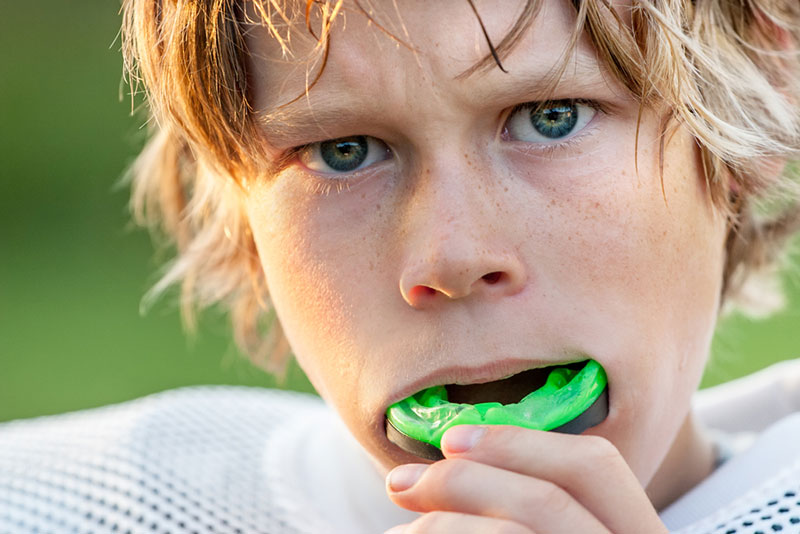
Dr. Paddy and Dr. Castro go to great lengths as pediatric dentists in Central Park and Englewood, CO to keep their patients’ smiles healthy. Hey, they’ve even given away a go-kart and perfected their floss dance all in the name of oral health! While when dental treatment is necessary, we use the latest technology and techniques to make it quick and comfy, the absolute best thing you can do for a child’s smile is focus on prevention. Of course, brushing and flossing play important roles in warding off cavities and keeping little teeth looking and functioning at their best, but there is something else that’s super important and often overlooked: mouthguards! Dental injuries in sports lead to a lot of missing teeth.
In fact, more than five million teeth are knocked out each year in the United States and the majority of these incidents occur during sports or physical activity. That’s why we’re such big proponents of mouthguards for kids and we’re an authorized provider of Under Armour Performance Mouthwear. Read on to learn more about our favorite piece of sports’ equipment. Continue Reading
It’s not uncommon for children to be a little freaked out by the dentist. It’s mainly because they don’t know what to expect and often times, they pick up on adults’ hesitancies. It’s completely understandable. However, once they’ve hopped up into Dr. Paddy or Dr. Castro’s chair a few times and experience how awesome our Kids Mile High offices are, they’ll actually like visits. Getting over that initial anxiety before they’re comfortable with their favorite Englewood or Central Park, CO pediatric dentist is the challenge though.
A while back, we wrote a post about helping children overcome a fear of the dentist and one of our ideas was reading books about the dentist. When kids see their favorite characters enjoying a cleaning and interacting with the doctor, it takes away some of the unknowns and helps put them at ease. Plus, you can’t go wrong encouraging reading. Here are some of our favorite children’s books about going to the dentist perfect for helping to prepare your child for an appointment:
Best Kids’ Books to Help Them Prepare for the Dentist
Mercer Mayer is such a talented author and illustrator and the Little Critter series is a favorite of Dr. Paddy’s. In this book, Little Critter goes to the dentist for a check-up, which includes x-rays, and even has to have a cavity filled. Of course, he handles the situation with bravery and humor and kids will see that dental visits aren’t something to be frightened of. Interested in checking it out? You can put a hold on this one at the Englewood Public Library.
Curious George is always getting into shenanigans and his visit to the dentist is no exception. This one is probably the funniest in our list of the best children’s books about going to the dentist. It all starts when George bites into an apple and his tooth begins to hurt and wiggle. The man in the yellow hat decides a trip to the dentist is in order but, since it’s his first time, Curious George is a bit nervous. Thankfully, he overcomes his fear, learns the ins and outs of caring for his smile and has fun in the process.
This isn’t just one of the best children’s books about the dentist, it’s one of the best children’s books period and it even received a Newbery Honor. Yeah, we might be a little biased because the main character is a dentist but it’s quickly becoming one of the classics. Written by William Steig, the author who wrote Shrek!, the same book the movie was based on, it puts a unique, whimsical spin on dentistry that will help kids feel more relaxed and positive about their own appointments. The best part is that it’s geared towards children of all ages and parents will enjoy it too.
In the book, Dr. De Soto is a dentist and his wife is his assistant. They also happen to be mice. They have super dental skills and treat animals who have toothaches painlessly and quickly. They make a habit of avoiding treating animals who might eat them but all that changes when a fox with a taste for mice visits with severe tooth pain and they have to find a way to give him the care he needs without becoming a snack. Check it out from the Sam Gary Branch Library in Central Park.
This is another of the classic children’s books on the dentist and features the beloved Berenstain Bears family. Dr. Bearson fills Brother Bear’s small cavity and then Sister Bear has to have a loose and dangling baby tooth removed. The story is geared towards the preschool set and it’s upbeat, positive and informative. The book is available at several Denver Public Library branches if you want to give it a read.
A lot of the children’s books for the dentist do mention cavities, fillings and a few talk about getting teeth pulled. They all have a positive take on it and discuss it in a way that doesn’t elicit fear. That being said, you know your child best. If you’re gearing up for their first visit and they’re more sensitive and have considerable anxiety about it, your best bet may be opting for children’s books about visiting the dentist that make no mention of procedures like My Dentist, My Friend by P.K. Hallinan. This book focuses only on the positive aspects and is a step-by-step guide to dental visits, which can be really reassuring.
We absolutely adore this comprehensive, lively, colorful guide for kids on taking care of their teeth and gums. It’s full of helpful information and awesome imagery. It really makes oral hygiene fun. It also has details telling children what to expect when they visit the dentist. While several of the children’s books about going to the dentist are meant for preschoolers and toddlers, elementary-aged kids will really like this one. It’s excellent for children who can read on their own and it will help them feel more engaged in their oral health.
While this list could go on for a quite a while, these are our favorite children’s books about going to the dentist because they mix humor, beautiful illustrations, good stories and fun. Demystifying dental visits by reading all about them is a powerful way to help kids get over their jitters. Head to the Public Library or swing by your local Denver bookstore (we’re partial to Second Star to the Right Children’s Books, Tattered Cover Book Store and The Bookies Bookstore) to find all of the best titles.
When you’re ready to tackle seeing the tooth doctor in real life, book – see what we did there? – an appointment at Kids Mile High Pediatric Dentistry in Central Park or Englewood by giving us a call at (303) 779-5306 (Englewood) or (303) 399-5437 (Central Park). We promise, we’ll make the experience exciting for your child and stress-free for you.
Laser dentistry is one of Dr. Paddy’s favorite innovations and not just because it sounds like something from a sci-fi movie (though that does give it some cool points). He also loves it because lasers help him perform all sorts of dental procedures with almost zero pain. In fact, we rarely have to give patients a shot of sleepy juice to numb them since, unlike with a drill, the technique doesn’t involve heat or vibration. At Kids Mile High, we offer pediatric WaterLase dentistry in Englewood, CO and Central Park, CO. Today, we’ll be covering how WaterLase works and why our patients and their parents are such big fans.
What is WaterLase Laser Dentistry?
We use both WaterLase MD and WaterLase iPlus lasers here at Kids Mile High. Though often referred to as laser dentistry, they’re actually types of water laser dentistry. So, what is water laser dentistry? Well, it relies on laser energy and water spray to help us perform different dental procedures on both the soft tissues, such as the gums, and the hard stuff like the teeth and bones.
The laser takes the place of other tools, including the drill and scalpel. Dr. Paddy uses the WaterLase hand piece to direct a concentrated beam of laser energy to the precise area of the tooth or gums that he’s treating. When the laser touches the surface, a reaction occurs with the water molecules and it can painlessly cut through the enamel or gum tissue. While the laser is doing its thing, a continuous spray of water cools the area, so no heat is felt, which is why it doesn’t hurt.
The pain associated with the drill is from the heat, vibrations and pressure. WaterLase has none of those things and when we use it for routine procedures like treating a cavity, the majority kids don’t need anesthetic. Bypassing the needles and the drill for any patient is a huge plus but it’s been particularly helpful for our littlest smiles. WaterLase lasers are safe and have been FDA-approved for treating kiddos and grown-ups.
As a super duper water laser dentist, Dr. Paddy can use laser dentistry for a bunch of treatments. While you’ll want to schedule an appointment at KMH to see if your child is a candidate based on their needs, generally, these are some of the common WaterLase procedures we perform:
Removing growths or extra tissue (like when we eliminate excess gum tissue that’s covering an un-erupted tooth)
Gum disease treatment
Treatment of mouth ulcers or sores
Why WaterLase Laser Dentistry?
Many parents come to us having heard that laser dentistry is “better” — but they’re not quite sure why. Fair enough. Here’s what we actually mean when we say that, broken down properly.
1. It’s Genuinely More Comfortable
Pain during dental treatment comes from three things: heat, vibration, and pressure. A drill produces all three. WaterLase produces none of them. That’s not marketing speak – it’s just how the technology works. For kids who’ve had difficult experiences with traditional dentistry, this difference is often the thing that finally makes dental visits manageable.
2. Most Kids Don’t Need a Needle
We’ve touched on this already, but it’s worth repeating because it genuinely changes the experience. For fillings and a lot of other restorative work, injections simply aren’t needed. For children who are terrified of needles – which, let’s be real, is most of them – this removes one of the biggest sources of dread before they even sit in the chair.
3. We Preserve More of the Natural Tooth
A drill has to be imprecise by nature. It removes a margin of healthy tooth around the decay just to be sure everything is cleared. WaterLase doesn’t need that buffer. It targets only what needs to come out, leaving the rest of the tooth structure intact. For a child’s developing teeth, keeping as much natural tooth as possible isn’t just nice to have – it matters long-term.
4. No Micro-Fractures
Here’s something most people don’t know about drilling: the vibrations can cause tiny hairline cracks in the surrounding enamel. These micro-fractures don’t always cause immediate problems, but over time they can lead to sensitivity or other issues. Because WaterLase doesn’t make physical contact with force, there’s no vibration and no risk of that kind of damage.
5. Fillings Actually Last Longer
This one surprises people. The laser etches and conditions the tooth surface at a microscopic level before the filling material goes in – which creates a stronger bond between the restoration and the tooth. In practical terms, that means fillings placed after WaterLase preparation tend to hold up better and last longer than those placed after traditional drilling. Better outcome, longer lifespan.
6. The Laser Kills Bacteria
Laser energy has natural antibacterial properties. When we’re treating a cavity or dealing with gum disease, the WaterLase is actively reducing the bacterial load in the treated area at the same time. That means better healing and a lower chance of reinfection – which is particularly helpful for children who are prone to recurring decay.
7. Soft Tissue Procedures Heal Much Faster
For anything involving the gums – frenectomies, removing excess tissue, treating gum disease – WaterLase produces far less bleeding and swelling than a scalpel. Stitches are rarely needed. Healing happens noticeably faster. For infants getting tongue-tie or lip-tie releases, this is a really big deal. Many babies are feeding again within minutes of the procedure finishing.
8. It’s So Much Quieter
The sound of a dental drill is one of those things that gets into your head. Even kids who’ve never had a filling are conditioned to feel uneasy about it. WaterLase barely makes a sound – a soft, low hum at most. For children with sensory sensitivities, dental anxiety, autism, or other special needs, this quieter environment isn’t a minor comfort. It’s often what makes the difference between a successful appointment and one that falls apart before it begins.
9. FDA-Approved and Clinically Proven
WaterLase technology from BIOLASE has been FDA-approved for use in children and adults for over two decades. It’s not new, and it’s not experimental. At Kids Mile High, we use the WaterLase MD and WaterLase iPlus – two of the most advanced systems available in pediatric dentistry today. You’re in good hands.
10. Fewer Appointments, Lower Overall Cost
Treating multiple areas in one visit doesn’t just save time – it also reduces the overall cost of treatment when you factor in fewer appointments. WaterLase dentistry is priced comparably to conventional treatment, and in many cases ends up being more economical once you account for the reduced number of visits. Less time in the chair, less time off school, less rearranging your week.
How Does WaterLase Dentistry Work for Children?
If your child has ever gripped the armrests at the sight of a dental drill, you’re not alone. The noise, the pressure, the shot beforehand – it’s a lot. WaterLase works completely differently, and once you understand how, it’s honestly hard to go back to thinking about traditional dentistry the same way.
Instead of a spinning drill, WaterLase uses a concentrated beam of laser energy combined with a fine water mist. That’s it. No friction, no heat, no vibration. Here’s what a typical visit actually looks like for your child:
Step 1: In Most Cases, There’s No Shot
This is usually the first thing parents want to know – and the answer is that for most routine procedures, your child won’t need a numbing injection at all. Dental pain from a drill comes from heat and vibration. WaterLase doesn’t create either of those things, so there’s simply nothing to numb. Kids walk in, sit down, and we get started. No needle, no waiting 10 minutes for the anaesthetic to kick in, no numb lip on the drive home.
Step 2: The Handpiece is Tiny – and Quiet
The WaterLase handpiece is small and lightweight. Our dentist guides it gently to the exact spot being treated — whether that’s a cavity, a gum issue, or a tongue-tie. The laser beam is remarkably precise. It targets only the area that needs treatment and leaves everything around it completely alone. Healthy tooth structure stays healthy.
Step 3: The Laser and Water Work Together
When the laser tip touches the surface, it energises the water molecules already present in the tissue. This causes the decay or gum tissue to break down and be removed — gently and accurately — without any of the pressure you’d feel from a drill. At the same time, a continuous cool water spray keeps the area comfortable throughout. Most kids describe it as a light tingling. Some say they don’t feel anything at all.
Step 4: We Can Often Treat Multiple Areas in One Go
Because we’re not waiting for anaesthetic and the laser works quickly, we can often treat more than one area of the mouth in a single appointment. That’s something that just isn’t practical with traditional methods. Fewer visits means less disruption to school, less rearranging your schedule, and honestly, just fewer trips to the dentist overall — which most kids are completely fine with.
Step 5: Recovery is Quick
After a WaterLase procedure, most kids are back to normal within a few hours. There’s very little post-treatment swelling or discomfort, especially for soft tissue work like frenectomies. And because there’s no lingering anaesthetic, your child can eat normally as soon as they feel comfortable. No waiting. No weird numb feeling. Just done.
Frequently Asked Questions About WaterLase Laser Dentistry for Kids
We get a lot of questions from parents before their child’s first WaterLase appointment. These are the ones that come up most often — answered as plainly as we can.
Q1: Is WaterLase safe for young children?
Yes — and this is one of the first things we want parents to feel confident about. WaterLase is FDA-approved for children of all ages, including infants. Our dentists are specifically trained in pediatric laser dentistry, and the energy levels used are calibrated for delicate tissue. We’ve used it safely on hundreds of young patients, from babies having tongue-tie releases to teenagers getting cavities filled.
Q2: Does it hurt?
For the vast majority of kids, no. The most common description we hear is a light tingling, or nothing at all. Because WaterLase doesn’t use heat or vibration — the real culprits behind dental pain — there’s simply much less to feel. For more involved procedures, we may still use a small amount of topical anaesthetic, but a full injection is rarely on the table.
Q3: Will my child still need a needle?
In most cases, no. For routine fillings and similar restorative work, the majority of our patients don’t need a local anaesthetic injection when we use WaterLase. Every child is different, and our dentists will always assess your child’s specific situation first — but if we can skip the needle, we will.
Q4: What procedures can WaterLase be used for?
More than most people expect. At Kids Mile High, we use WaterLase for:
Removing decay and preparing cavities for fillings
Frenectomy (tongue-tie and lip-tie release)
Removing excess or overgrown gum tissue
Treating gum disease
Relieving pain from mouth ulcers and canker sores
Exposing teeth that haven’t come through fully
Soft tissue biopsies
Q5: Is it more expensive than regular dentistry?
Generally, no. WaterLase treatment is priced comparably to conventional care and once you factor in fewer appointments and less need for anaesthetic, it often works out similarly or even more cost-effective. We’re always happy to walk you through what your child’s treatment would look like cost-wise, and we can help you figure out what your insurance or FSA/HSA covers.
Q6: How long does a WaterLase appointment take?
Usually shorter than you’d expect, since we’re not spending time waiting for anaesthetic. A straightforward filling can take as little as 15 to 20 minutes from start to finish. More complex procedures take longer, of course but we’ll give you a realistic time estimate at your child’s consultation so there are no surprises.
Q7: My child has really bad dental anxiety. Is this still an option?
Honestly, WaterLase tends to be one of the best options for anxious kids specifically. No loud drill, no needle in most cases, no pressure or vibration the things that trigger anxiety in the first place are mostly just gone. We’ve had children who’d previously needed sedation for routine fillings complete WaterLase procedures without any sedation at all. It doesn’t happen overnight for every child, but the change we see is often remarkable.
Q8: Can you use it on babies and toddlers?
Yes. Infant frenectomies releasing tongue-tie or lip-tie are one of the most common uses of WaterLase in very young children. The procedure is brief, there’s minimal bleeding, and stitches are almost never needed. Many babies resume feeding within minutes. For parents who’ve been struggling with breastfeeding or early speech concerns related to a tongue-tie, this can genuinely be life-changing.
Q9: How do I know if my child is a good candidate?
The best way is to come in and let us take a look. Our dentists Dr. Paddy, Dr. Roger, Dr. Meredith, Dr. Camille, and Dr. Catherine will examine your child, talk through what they need, and recommend the right approach. WaterLase works well for the vast majority of children, but we always tailor our recommendations to the individual child in front of us.
Q10: Is WaterLase available at all your locations?
WaterLase is currently available at our Englewood and Central Park, CO offices. Give us a call to confirm and to book your child’s consultation — we’d love to show you what a different kind of dental visit can feel like.
Dr. Paddy absolutely loves winter sports and it’s one of the reasons he moved to Denver and become an Englewood and Central Park pediatric dentist. Yet, as much as he adores snow, Denver’s awesome all year long. Plus, he knows once February rolls around, kids can get a little stir crazy in between cold-weather adventures.
So, he’ll join the parents in the countdown to spring and in honor of the approaching season, we’ve put together a preview of upcoming opportunities for family fun. Of course, there are an array of cheap activities for kids in Englewood, Central Park and downtown Denver but Kids Mile High Pediatric Dentistry is always up for a challenge, which is why we’re focusing only on free spring activities for kids.
Free Spring Fun for Kids in Central Park and Denver
Children’s Festival of Stories
McNichols Civic Center Building, 144 W. Colfax Avenue, Denver – While the first annual Children’s Festival of Stories is technically a few days shy of spring, we love the idea and it’s close enough so it makes our list of free Denver activities for kids. Historic Elitch Theatre and Second Star to the Right are joining forces to put on this celebration of stories and reading at the McNichols Civic Center Building, which was actually the home of Denver’s first public library at one time.
The festival will be held on Saturday, March 17 and Sunday, March 18 with an evening event for adults on Friday, March 16. Festivities will include all sorts of fun performances and activities, including appearances by children’s book authors and illustrators.
On Saturday, March 17 from 9am to 4pm, young readers (infancy through 14-years-old) as well as parents, fans of children’s books and educators can enjoy interactive storytimes, book signings, panel presentations, performances, creation stations and more. On Sunday, March 18 between 10am and 3pm, there will be free workshops for writers and artists eight-years-old and up. Kids (and parents!) can hone their craft and have a blast learning and creating. Registration is required for the workshops.
Go on an Art Walk
Luckily, finding free Central Park, CO spring activities for kids aren’t hard to find when you have such a vibrant community. Combine fresh air, exercise and culture by going on an art walk. Central Park has 16 public art pieces with work from artists around the country that will pique your child’s curiosity. Use the Central Park public art map to create a route or just freestyle one.
Family Day at the Opera
Ellie Caulkins Opera House, 1385 Curtis Street, Denver – If you want to do something unique, let the kids experience the opera at the free Family Day event on Saturday, March 24. You’ll get the chance to take in a production sung in English by Opera Colorado’s Young Artists and also explore the Ellie Caulkins Opera House.
Cinderella will be performed at 10am and a performance of The Elixir of Love will be held at 1pm. An hour prior to each performance, there will be kid-friendly refreshments and activities. Reservations are required, so scoop up your free tickets online starting March 1.
Easter Egg Hunts
Good, old-fashioned Easter egg hunts are the perfect free spring activities for kids in Denver. The Central Park Egg Scramble will be held on Saturday, March 24 at 10am at Runway 35 (8863 E. 47th Avenue, Denver). It’s open to children and adults of all ages.
The Englewood Great Egg Scramble at Belleview Park (5001 S. Inca Drive, Englewood) will also be held on Saturday, March 24 at 10am. This one’s for kids ages one through eight (children will be grouped according to age). The event is free but donations will be accepted. The rain date is scheduled for Saturday, March 31.
Mommy and Me Movement & Creative Art Class
McNichols Civic Center Building, 144 W. Colfax Avenue, Denver – The McNichols Civic Center Building is really the place to be this spring but what else is new? Anyway, the amazing Rebecca Kanov, founder of Arts & Minds, teaches free Denver mommy and me classes focused on movement and creative arts for parents and children (crawlers through four-years-old) at McNichols.
Children will get an introduction to dance, sensory play, breathing and yoga. Classes are held on Tuesdays at 11am through May 22. Complete the one-time waiver and register for the class by emailing info@artsandmindskids.com and confirming the date and number of tiny tots you’ll be bringing.
Englewood Library, 1000 Englewood Parkway – Looking for free Englewood spring activities for kids to keep your brood entertained during spring break this year? The Englewood Public Library will hold programs for children Monday, March 26 through Friday, March 30 at 1pm. The events will be tied to STEM, art, music and reading. There’s nothing wrong with keeping the learning going even when school’s out.
Life-Size Candy Land
Sam Gary Branch Library, 2961 Rosyln Street, Central Park, Denver – The Sam Gary Branch Library is an excellent place to find free activities for kids in Central Park, including regular storytimes. However, there’s one event scheduled this spring that’s a childhood dream come true: a life-sized game of Candy Land! The game, which is geared towards children ages three through eight, will be held on Friday, April 20 from 6 to 8pm in the library’s meeting room. For details on how to sign up, call the branch at (720) 865-0325.
Free Days at the Denver Botanic Gardens
1007 York Street, Denver – The Denver Botanic Gardens is one of the top five botanic gardens in the country and it’s also home to the smaller, 3-acre Mordecai Children’s Garden, which is full of hands-on experiences and play. There are free days where admission doesn’t cost a dime throughout the year.
This spring, they’re scheduled for Sunday, April 8 and Tuesday, June 5. Can’t make those dates? The Chatfield Farms outpost in Littleton (8500 W. Deer Creek Canyon Road) will have free days on Tuesdays, March 6, April 3and June 5.
Earth Day Celebration
Littleton/Englewood Wastewater Treatment Plant, 2900 S. Platte River Drive, Englewood – Round up the family on Sunday, April 22 and celebrate Earth Day by giving the South Platte River a little TLC. This free Englewood, CO family event will involve a river walk and community clean up along a one-mile section of the river. Trash bags, vests, trash pickers and safety gloves will be provided as well as a light lunch after the work is done. For more information, contact Deb Parker at (303) 762-2638.
Día del Niño (Day of the Child) Celebrations
Denver – There are two fun, free Denver family events on Sunday, April 29 in honor of Día del Niño, a celebration of children observed by countries around the world. There will be a festival at the History Colorado Center (1200 N. Broadway) from 10am to 5pm with art-making activities and performances.
In partnership with the Denver Art Museum and other cultural organizations, The Clyfford Still Museum (1250 Bannock Street) will hold Día del Niño Family Day from 10am to 4pm. Watch live performances in the Museum’s forecourt and do art projects and activities before exploring the museum’s galleries. No registration necessary; just show up and celebrate!
Spring cleaning should always include a trip to the dentist. Get a jump start on the season and book a free consultation today.
It would be nearly impossible to sail through life without ever having stinky breath. After all, what kind of world would it be without garlic bread? While we often think of it as a problem that plagues adults, as most parents can attest, when it comes to bad breath kids aren’t immune either. In fact, halitosis (a fancy word for bad breath) can occur even in babies. A little morning breath is no big deal. However, mom and dad often get rightfully concerned when it’s persistent and lasts throughout the day even after brushing. Acute and chronic bad breath are typically caused by different things and we’ll go over the common culprits as well as how to get rid of bad breath in a child.
What Can Cause Bad Breath in Toddlers, Infants and Children?
Halitosis usually comes from the mouth but it can also originate in the nose or airway depending on the underlying cause. Who knew bad breath was such a complex issue? As a Denver pediatric dentist, here’s what Dr. Paddy sees most:
Morning Breath: When we’re sleeping, our saliva production slows way down. This lets odor-causing bacteria hang out and create a stink. Fortunately, this type of halitosis goes away when we brush our teeth and the spit starts flowing again.
Certain Foods: The digestive process begins as soon as you take a bite of food. Garlic, onions, cheese and other strong smelling foods start to breakdown in the mouth and as this happens, your kid’s breath doesn’t smell all that great. It’s a temporary type of halitosis and nothing to be alarmed about.
Poor Oral Hygiene: This is by far the number one reason kids develop bad breath. When children don’t brush and floss properly, food particles and plaque work their way into every nook and cranny and certain bacteria in the mouth have a heyday and release a stench. This can be even worse with children who are wearing fixed orthodontic appliances since they’re a little more challenging to keep clean.
The Tongue: The vast majority of odor-causing bacteria are on the back of the tongue where they attach to epithelial cells. These cells, bacteria and food particles get stuck in the crevices and decompose giving off a really foul smell.
Tooth Decay and Other Dental Problems: Cavities are decaying teeth and decay never smells good. Plus, teeth with cavities tend to trap food debris, which just adds to the problem. Abscessed teeth, mouth sores and damaged or improperly placed restorations can all stink or allow bacteria to accumulate too.
Gum Disease: Cavities, cavities, cavities. They’re the mouth monsters that get the most attention but gingivitis, or gum disease, is a serious concern too. When plaque and tartar build up on the teeth, the bacteria release acids and toxins that cause the gums to get infected and inflamed. One of the symptoms is bad breath.
Dry Mouth: This is a little like morning breath in that saliva isn’t washing away bacteria and food debris so the breath starts to smell. However, dry mouth, or xerostomia, doesn’t usually go away as easily as morning breath, particularly if it’s caused by medication or a medical condition. Dehydration can be behind dry mouth as well but it’s an easier fix.
Mouth Breathing: Mouth breathing, whether it’s a sleep habit or an occasional thing due to a stuffy nose, halts salvia production and causes dry mouth, leading to halitosis
Sinus Infection: Sinus infections are another cause of bad breath that occurs frequently. The mucus makes its way down the back of the throat and gets comfy on the tongue. The bacteria then feed off the mucus and release smelly gases.
Prominent Tonsils: Large tonsils or tonsils with deep pits are magnets for debris and oral and nasal secretions that decompose and smell bad. Also, tonsilloliths (whitish-yellow secretions) can form in the pits and as they break up, they give off a stinky odor.
Medications: Antihistamines, bronchodilators, antipsychotics, antidepressants, antispasmodics and several other medications are known to cause dry mouth and bad breath. When kids use antibiotics for an extended period, halitosis can also temporarily rear its head.
Health Conditions and Illnesses: There are a variety of health conditions that can result in halitosis in children including diabetes, the aforementioned sinus infections and postnasal drip, allergies, gastroesophageal reflux, infections in the respiratory tract, thrush, diabetes and, less commonly, liver and kidney issues, among others. Don’t panic. Just because your kid’s breath is unpleasant, it doesn’t mean they necessarily have a disease or serious health concern. However, if we’ve ruled out all other causes, visiting the pediatrician is a good idea.
Something Stuck in the Nose: Let’s face it, kids do some strange things as they explore the world around them and toddlers have been known to stick things in their nose. Whether it’s a small toy or a piece of food, it will cause inflammation, nasal secretions and eventually a bad odor. If, after all of your investigative work, you’re still asking yourself, “Why does my toddler’s breath smell so bad?,” it can’t hurt to take a look in their nose. If you do spot something and it happens to be a hard object, you can make an attempt to remove it yourself. The Cleveland Clinic suggests trying the “mother’s kiss” method a single time. To perform the “mother’s kiss,” put your hand over your little one’s mouth, close the nostril that isn’t obstructed with your finger and blow gently into their mouth. If it’s not successful or the object is soft, seek medical attention. If you don’t see anything but there’s a foul stench coming from one nostril or your child has a high fever and dark green mucus, contact their pediatrician.
Have your child brush their teeth at least twice a day for two minutes each time and floss once daily. For younger kids, you’ll probably need to brush and floss for them or at least provide a little assistance and supervision. Kids should brush the back of their tongue or use a tongue scraper too to get rid of the smelly coating.
Make breakfast a priority. Eating in the morning gets the saliva going and helps wash away food particles and bacteria.
To keep dry mouth at bay, children need to drink enough water throughout the day. They can also rinse with water after every meal or snack or whenever their mouth feels dry.
Another way to boost saliva production and say goodbye to bacteria is letting kids chew sugarless gum (they’ll love this one!). Look for gum containing xylitol, a natural way to fight cavities, and you’ll address two problems at once.
Give your child raw fruits and veggies as snacks. Crunchy things like carrot sticks or apple slices are “nature’s toothbrushes” since they can help scrape away plaque. Plus, if they fill up on healthy foods, they’ll be less likely to seek out sugary treats.
If halitosis is caused by cavities, gum disease or oral infections, your dentist will need to step in and treat the problem while also giving you instructions for home care.
Try to stop mouth breathing in its tracks if it’s a nighttime habit. Pediatric dentists are well versed in helping patients eliminate harmful oral habits.
Visit the pediatrician regularly and if bad breath is from a health condition, talk about possible treatments. If medication is the reason and a child is really bothered by their bad breath, you might want to discuss alternatives.
See your pediatric dentist for regular checkups and cleanings. We’ll keep your child’s oral health on track and kick dragon breath to the curb.
How We Get to the Bottom of Bad Breath in Kids
When kiddos come into our Denver pediatric dental practice with bad breath, we don’t just give them mints or tell them to brush and floss more. We want to find the underlying cause in order to best treat the problem. Here’s what you can expect:
The Sniff Test: Parents are sometimes surprised when Dr. Paddy gets a few inches away from their child’s mouth and sniffs. However, this is the most reliable way to diagnose halitosis and different smells can mean different things. For example, gum disease and tooth decay have distinct odors as do issues like uncontrolled diabetes.
Complete Medical History: Once we smell your child’s breath, we’ll chat with you about their health history, medical conditions and medications they’re taking.
Examination: An exam is necessary to check for problems such as cavities, gum disease, dry mouth, damaged restorations, mouth sores and debris and plaque around orthodontic appliances. These are all treatable and the sooner we uncover the problem, the sooner your child can regain their fresh breath.
A lot of causes of bad breath can be taken care of at home. However, if excellent oral hygiene, a healthy diet, plenty of water and other practices don’t help at all, schedule an appointment at Kids Mile High. Dr. Paddy has been trained in the unique oral health needs of kids. He can determine the reason why your child’s breath smells bad and take the steps to fix it.
Hanukkah is underway, Christmas is fast approaching and before you know it, we’ll be ringing in 2018. This time of year means twinkling lights, candles aglow, festive tunes, gifts, enjoying the company of loved ones and a general feeling of goodwill but it also means sugar, sugar and more sugar! There’s nothing the mouth monsters love more than holiday sweets. Dr. Paddy and the Kids Mile High team are all well aware that patients aren’t going to follow up a night of caroling with hot carrot juice instead of hot chocolate and we wouldn’t expect little ones to give up all of their favorite treats. However, a few small tweaks can really go a long way in preventing cavities. Here are our tips for parents on how to keep your kids teeth healthy during the holidays.
Pay Special Attention to Brushing and Flossing: So, you got home late from a family gathering. It would be so easy to let the kiddos skip their oral hygiene routine for the night and fall into bed. Try your very best to avoid this and spend the few extra minutes making sure their teeth are brushed and flossed. As always, have your kids brush twice a day (once in the morning and once at bedtime) with a fluoride toothpaste and floss at night. You may even want to follow up with a cavity-fighting mouthwash. If you’re unsure of what to use, ask us, and we’ll point you in the right direction. During the holidays, if your kids are really getting down with the sweets, it’s a good idea to throw in an extra brushing session or at least have them rinse their mouth out really well with water after eating or drinking something high in sugar.
Moderation is Key: We know it’s easier said than done but sticking with a balanced, nutritious diet during all of the celebrations is important. Munching on desserts and sipping on sweet drinks is best done in moderation. Plus, it will make them taste all that much better knowing it’s a special occasion. Limiting treats at the holidays for kids really starts at home. Keep your own pantry stocked with healthy essentials and let them get their treat fix when you’re out and about so that it’s not a continuous cycle of sugar. If there’s a particularly sugar-fueled event on the calendar, it could be helpful to be extra careful about what your kids eat leading up to it.
Don’t Eat or Drink too Slowly: There are a lot of benefits of eating slowly and savoring your meals but when it comes to kids and candy, soda and all of the big cavity offenders, slow isn’t better. The bacteria in the mouth feed on sugars and starches and as they do, they release acids that mix with spit and food debris and form plaque. When it isn’t brushed away, the acids start to damage the enamel, eventually leading to cavities. After eating or drinking, the bad acids hang out for about a half hour and with each sip or bite, the clock starts over. So, slowly sipping on hot chocolate over the course of an hour or snacking on treats throughout the day just means little teeth are exposed to acids for much longer. Sugar here and there is fine but constantly bathing the teeth in it isn’t. Instead, make sure your kids are drinking sugary drinks or eating sugary snacks at a normal pace and in one sitting.
Make Some Healthy Swaps Where You Can: Some of the worst holiday treats for your kids can easily receive a healthy makeover and still taste fantastic. Using fresh fruit in certain cakes, for example, can take the place of some of the refined sugar while offering a hint of sweetness. Making hot chocolate that’s heavy on the milk and lighter on the chocolate, will give teeth a boost of calcium and milk has been shown to decrease the acid levels in plaque.
Give the Kids a Few Tooth-Friendly Holiday Gifts: Only putting dental floss and fresh vegetables under the tree probably won’t go over that well but that doesn’t mean a few gifts can’t be related to oral health. Sugarless gum with xylitol is excellent for killing sugar bugs and it’s the perfect stocking stuffer or small, add-on Hanukah gift. You can also try exceptionally tasty toothpaste along with an electric toothbrush for older kids or a super fun, colorful toothbrush for younger ones.
Hydrate with Water: Water is up there on the list of things that teeth love. It keeps spit flowing and spit neutralizes those plaque acids. Plus, it gives teeth a bath, washing away food debris and bacteria. Have the kids drink water throughout the day and balance out any other beverages with a glass of H20. Fill up your water bottle before heading out to a party or a visit with Santa.
Keep Up With Dental Exams and Cleanings: We know it gets really busy around the holidays and going to the dentist probably falls lower on the to-do list than say, eating a ton of Christmas cookies. However, your child’s checkups and cleanings are the cornerstones of their preventative care. We’re able to get rid of the hardened plaque that can’t be eliminated with brushing and flossing at home, make sure teeth and gums are in top-notch shape and, if problems do arise, we can catch them early while treatment is less invasive. Consider it your gift to your little one’s smile!
Keeping your child’s teeth healthy during Christmas, Hanukkah and New Year’s doesn’t have to turn into a seasonal full-time job. Just be mindful of their sugar intake and follow the same guidelines as you do the rest of the year. As long as your child is brushing and flossing, going for their regular checkups and cleanings and not eating an all candy cane diet, there’s no need to worry. If you have questions or concerns or want to start your child’s 2018 off with a bright smile under the care of a Denver pediatric dentist, contact us.
Happy holidays from Kids Mile High Pediatric Dentistry!
After a lot of drooling, plenty of teething rings and usually some sleepless nights, your baby is sporting their first tiny pearly whites. It’s a momentous occasion! By age three, they’ll probably have a complete set. While adorable, your little one’s grin will go through more dramatic changes a few years later when they start to lose those heard-earned teeth. Given their fleeting nature, why do baby teeth matter? Aren’t they just going to fall out anyway? Well, they will eventually be replaced by the big, bad permanent teeth but in the meantime, they need to stick around until they’re ready to be added to the Tooth Fairy’s collection. While the importance of primary teeth is often underestimated, they serve a number of purposes and play a crucial role in your child’s oral health and development.
The Baby Teeth Basics
Primary teeth go by a variety of names, including baby teeth, deciduous teeth, temporary teeth and milk teeth. Whatever term suits your fancy, they’re actually already in your baby’s mouth at birth just waiting under the gums for their moment to make an entrance. The first tooth usually erupts around six months of age with the last typically coming in by three-years-old. The baby teeth then fall out, or shed, beginning at six or seven all the way through age 12. However, most people don’t have all 32 permanent chompers for quite some time. In fact, it can take up until you’re 21-years-old for it to happen.
Now, on to the functions of baby teeth. Some of their roles include:
Saving Space and Encouraging Proper Development – Baby teeth act as placeholders and save room for the grown-up teeth to erupt correctly. They also facilitate proper jaw and muscle development and the development of facial features. If a baby tooth falls out early, the other teeth often shift to fill in the space, which can lead to misaligned permanent teeth and jaws and potentially the need for extensive orthodontic treatment or, in extreme cases, surgery and extractions. While a lot of kids may end up wearing braces or Invisalign Teen in their teenage years, the degree of misalignment and the complexity of their case will influence how complicated treatment is, as well as its duration and cost. Obviously, reducing the odds of serious orthodontic issues by keeping baby teeth healthy is preferable.
Allowing for Proper Chewing – Over time, kids learn to chew correctly, which encourages good nutrition and overall health. When a child has tooth decay, malformed teeth or pain, they’ll stick with the foods that are the easiest to eat, which limits their diet and increases the chances they’ll be underweight, malnourished or deficient in vitamins and minerals.
Aiding in Speech Development – Learning to talk is so crucial for your child’s cognitive and social development. The teeth play a part in our ability to speak clearly and produce certain sounds, particularly consonants. When the teeth are in the right place, we’re able to form sounds that rely on our tongue touching the top teeth, our teeth directing the flow of air or the tongue having enough room to do its thing. When kids lose their front teeth, they might temporarily have a lisp or make hissing sounds when talking but this goes away and they’ve already learned to speak correctly. If they’ve never had the chance to learn proper pronunciation, fixing the issue can be more difficult.
Boosting Self-Esteem – Having a healthy, beautiful smile gives children confidence and they’ll be less likely to be distracted by tooth discomfort or insecurities about their appearance, allowing them to focus on school, socialization and just being a kid.
Ensuring Long-Term Oral Health – Tooth decay can result in childhood gum disease, technically called periodontal disease. In early stages, gum disease can be treated and reversed. However, once it reaches the level of periodontitis, it can only be managed and not cured. Eventually, if not dealt with, gum disease causes the deterioration of the bone and tissues that hold the teeth in place, which can make them fall out.
Caring for Primary Teeth
Caring for baby teeth starts a few days after birth. Even though your infant isn’t eating solid food, the natural sugars in formula and breast milk can actually cause cavities. Simply wrap a wet washcloth or piece of gauze around your finger and use it to wipe down your child’s gums. If your water isn’t fluoridated or your little one won’t be drinking tap water, you should ask your pediatrician about fluoride supplements, which can usually be taken after six-months-old.
When your tot gets their first tooth, use a small, soft-bristled, infant-sized toothbrush and a smear of fluoride toothpaste to brush their teeth twice a day. As for flossing, once any two teeth are touching, help them floss once daily. For those ages two to five, brush their teeth in the morning and before bed for two minutes each time with a pea-sized dollop of fluoride toothpaste. You’ll need to help with brushing until they can do it effectively on their own. Once they have the skills to brush and floss, just be sure to monitor their oral hygiene routine until age seven or eight. Sealants and fluoride treatments can also be extremely beneficial for preventing cavities and a great way to bolster your efforts.
Aside from a stellar brushing and flossing routine, the most important thing you can do for your kiddo’s smile is see a dentist regularly for cleanings and checkups. The American Dental Association, American Academy of Pediatric Dentistry and the American Academy of Pediatrics all recommend children have their first dental visit six months after the first tooth erupts or no later than their first birthday. It’s always a good idea to find a pediatric dentist. They’ve had additional specialty training in the unique oral health needs of children and have expertise in behavioral techniques to make the process a lot easier on both kids and parents. Beyond keeping cavities and gum disease at bay, pediatric dentists can help you eliminate harmful oral habits like thumb sucking and point you in the right direction for a mouthguard to protect your child’s teeth during sports and activities.
When it comes to what foods can impact the health of baby teeth, sugary drinks like soda, sports drinks and fruit juice, as well as cookies, candy and other sweet treats are big tooth decay offenders. Limit things with added sugar and simple carbohydrates and, instead, opt for fresh vegetables and fruits, calcium-rich foods, whole milk for babies or low-fat milk for toddlers and school-aged kids, whole grains and lean protein. Water is the ideal beverage and never put your child to bed with a bottle even if it’s just milk. For even more pointers, check out our nutrition guide.
Now that you’re well-versed in baby teeth importance and how to care for them, set your child up for smile success by finding the right dental home. Do you live in the Denver area? Schedule an appointment at Kids Mile High Pediatric Dentistry and leave those primary teeth in the hands of a board-certified pediatric dentist in Englewood or Central Park. Our offices are super kid-friendly, fun and lively. In addition to making going to the dentist a positive experience, we’ll ensure their baby teeth are healthy and doing their job, so their permanent smile is a dazzling one.
Dr. Paddy, Dr. Roger, Dr. Meredith and Dr. Scheer are on a mission to give your child the absolute best dental and orthodontic care using the most up-to-date techniques and modern equipment. Read more